Shopify development

Scalable Shopify Collections for a Low-Alcohol Drinks Retailer

A scalable Shopify collection system for a low-alcohol drinks retailer, using a hybrid automated and manual approach to keep the catalogue organised and easy to merchandise.

Client
MidStrength Drinks
Industry
Drinks retail
Timeframe
Ongoing
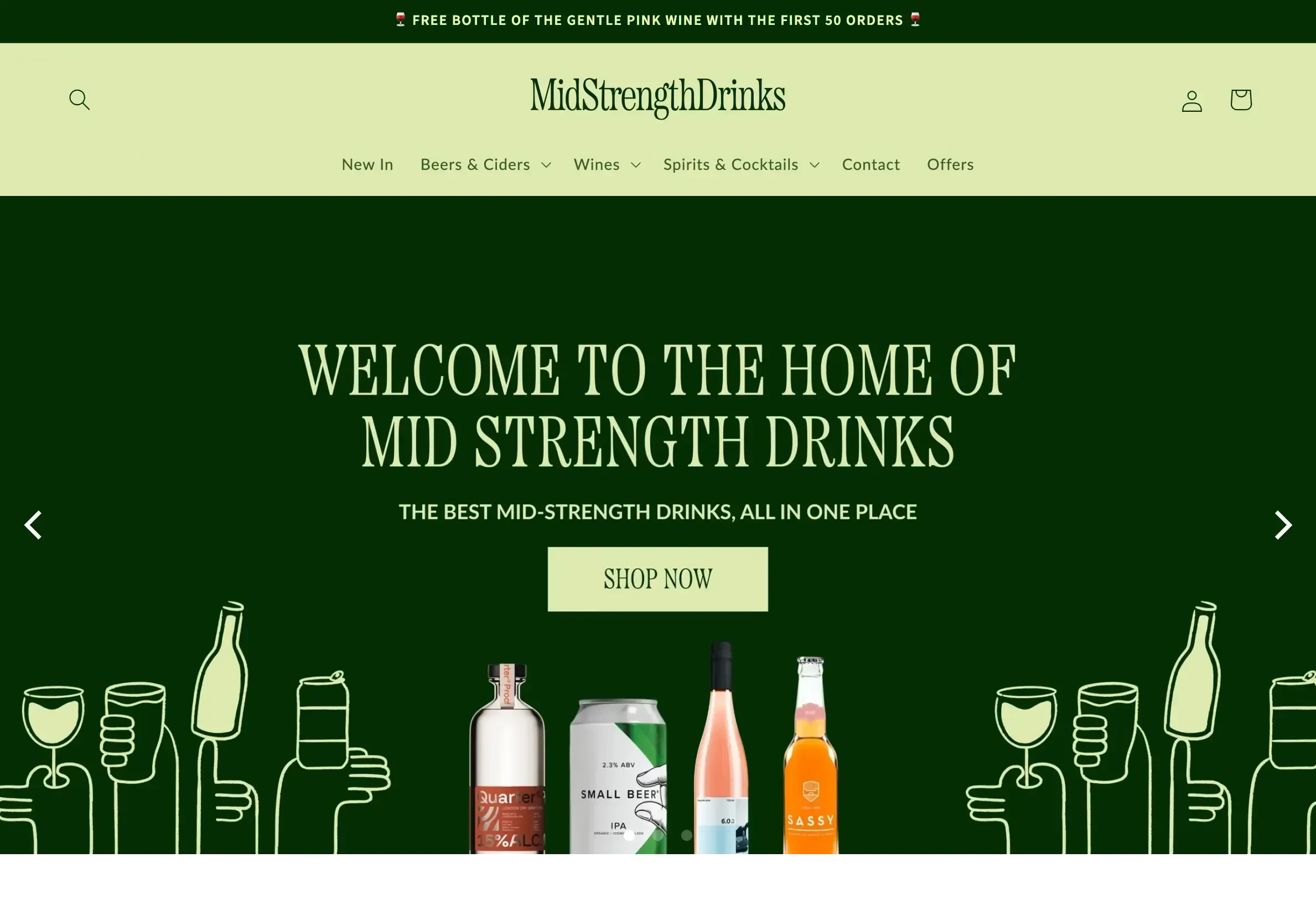
Scalable Shopify Collections for a Low-Alcohol Drinks Retailer website on desktop

MidStrength Drinks needed a Shopify collection structure that would stay organised as the product range grows. The goal was to automate core category browsing while still allowing manual control for promotions and curated collections—without creating a maintenance burden as the catalogue expanded.

The project focused on a clean, scalable collection plan, clear tagging conventions, and a staged approach to "New In" automation so the store could launch simply and evolve without rework.

Key results

  • Reduced

    Manual collection management through automated rules

  • Scalable

    Foundation that handles catalogue growth without a rebuild

  • Clear

    Internal rules so new products get categorised consistently

The brief

MidStrength Drinks needed a clean, scalable Shopify collection structure that would keep the catalogue organised as it grows, reduce manual admin through automation, and still allow flexibility for promos and editorial merchandising.

The key decision was to use a hybrid collections model: automated collections for the permanent store structure, with manual collections reserved for campaigns and curated merchandising.

  • Keep the catalogue organised as it grows
  • Reduce manual admin work through automation
  • Allow flexibility for promos and editorial merchandising
  • Establish a tagging and collection strategy suitable for CSV import and long-term maintenance

The challenge

MidStrength Drinks needed a Shopify collection structure that would stay organised as the product range grows. The goal was to automate core category browsing so that products landed in the right places without constant manual updates, while still allowing the team to create and control campaigns and curated collections.

Shopify cannot natively filter collections by "created in the last 30 days", so a workable approach for a "New In" collection had to be designed. The solution had to be maintainable as the catalogue grew and flexible enough for future automation upgrades.

Scalable Shopify Collections for a Low-Alcohol Drinks Retailer – the challenge

The approach

A hybrid model was used: automated collections for the permanent store structure, paired with manual collections for campaigns and editorial merchandising. Automation rules were designed using product types, tags, and structured metafields.

Core automated collections: Defined for Beer, Cider, Wine, Spirits, RTD, Soft Drinks, Bundles and Gift Sets, plus a New In collection. Rules were built using a mix of product type (primary driver for top-level categories), tags (features and merchandising flags), and metafields for deeper subcategories such as beer style (e.g. IPA, Lager, Stout). That avoids tag chaos and gives structured filtering that works long term.

Tagging conventions: A clear tagging system was established so products reliably drop into the right collections and filters: type tags (beer, cider, etc.), ABV tags (0.0%, 0.5%), feature tags (gluten-free, vegan, new, bundle), and brand tags (lowercase, hyphenated standard). This standardisation reduces admin and keeps automation consistent.

New In automation: Because Shopify cannot filter by "created in the last 30 days", a staged approach was planned. The launch solution uses a simple manual new tag to populate the New In collection. A future upgrade path was mapped using Shopify Flow and Mechanic (or an auto-tagging app) to automatically tag new products and remove the tag after 30 days once the catalogue and admin overhead justify it.

Deliverables: A complete collection plan with automation logic, a tagging guideline for how products are labelled, a collection and product data import strategy suitable for Shopify CSV workflows, and a future-proof automation roadmap for New In.
The outcome

The store now has a scalable, low-maintenance collection structure that keeps products organised automatically, supports consistent filtering, and leaves room for flexible promotional merchandising.

Manual collection management has been reduced through automated rules. Navigation and merchandising structure are clearer for customers. The foundation can handle catalogue growth without a rebuild, and clear internal rules mean new products get categorised consistently.

Why it worked

The hybrid split—automated for the predictable "always on" structure, manual for campaigns and curation—keeps things maintainable without killing creativity. The boring bit—tagging conventions and metafields—is what saves weeks of admin later and makes the automation reliable as the range grows.

Starting with a manual new tag for launch simplicity, with a documented upgrade path to Flow and Mechanic or an app, meant the client could go live without over-engineering, and evolve New In when the catalogue and workload justify it.

Start a conversation

No obligation. No sales pitch. Just an honest conversation about what you need.

No obligation. No sales pitch.